

A chandelier that is too small looks lost, and one that is too large crowds the room and feels heavy overhead. Size is the one detail that decides if a beautiful fixture looks like a deliberate centerpiece or an afterthought, and getting it right takes only a tape measure and some simple rules.
The measurements below cover the room, the ceiling, the furniture underneath, and the hanging height, with quick reference tables for living rooms, dining areas, bedrooms, entryways, and kitchens. Both centimeters and inches are included, since fixtures are often listed in either, and each section explains the reasoning behind the numbers so they are easy to adapt to unusual spaces.
Explore Luxury Collection Chandeliers Lighting collection in Dubai, UAE
Start with the Room: The Simple Diameter Formula
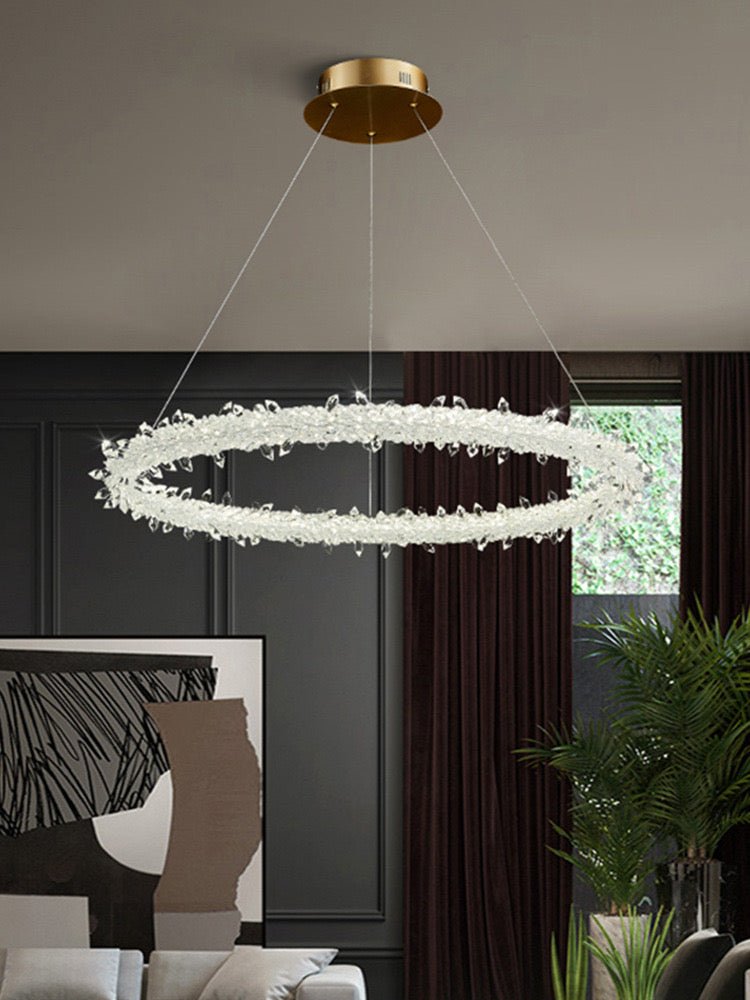
XIVARA crystal LED ring ceiling - Shop Now
The easiest way to find a starting size is to measure the room. Add the length and the width together in feet, and that number in inches gives a good chandelier diameter. A room that measures 12 feet by 14 feet adds up to 26, so a chandelier around 26 inches wide is a comfortable match. This works because the fixture grows in step with the room, keeping its proportions pleasing in a compact space and a generous one alike.
In metric terms, add the length and width in meters and multiply by about 8. A room of 4 by 5 meters totals 9 meters, which points to a chandelier of roughly 75 centimeters in diameter. The result is a starting point rather than a strict rule, and it is worth rounding to the nearest size that is actually available.
| Room Size | Length + Width | Suggested Diameter |
|---|---|---|
| 3 m x 3 m (10 ft x 10 ft) | 6 m | 50 cm (20 in) |
| 3 m x 4 m (10 ft x 13 ft) | 7 m | 55 to 60 cm (22 to 24 in) |
| 4 m x 4 m (13 ft x 13 ft) | 8 m | 65 cm (26 in) |
| 4 m x 5 m (13 ft x 16 ft) | 9 m | 75 cm (30 in) |
| 5 m x 5 m (16 ft x 16 ft) | 10 m | 80 to 85 cm (32 to 34 in) |
| 5 m x 6 m (16 ft x 20 ft) | 11 m | 90 cm (36 in) |
| 6 m x 7 m (20 ft x 23 ft) | 13 m | 105 to 110 cm (42 to 44 in) |
| 7 m x 8 m (23 ft x 26 ft) | 15 m | 125 cm (50 in) |
Treat these figures as a guide. A chandelier with an airy, open frame can run a little larger than the table suggests, because the eye sees through it and it takes up less visual space. A dense, dark, or heavily detailed fixture usually looks best at the smaller end, since its mass is more noticeable.
Ceiling Height Decides the Fixture's Height
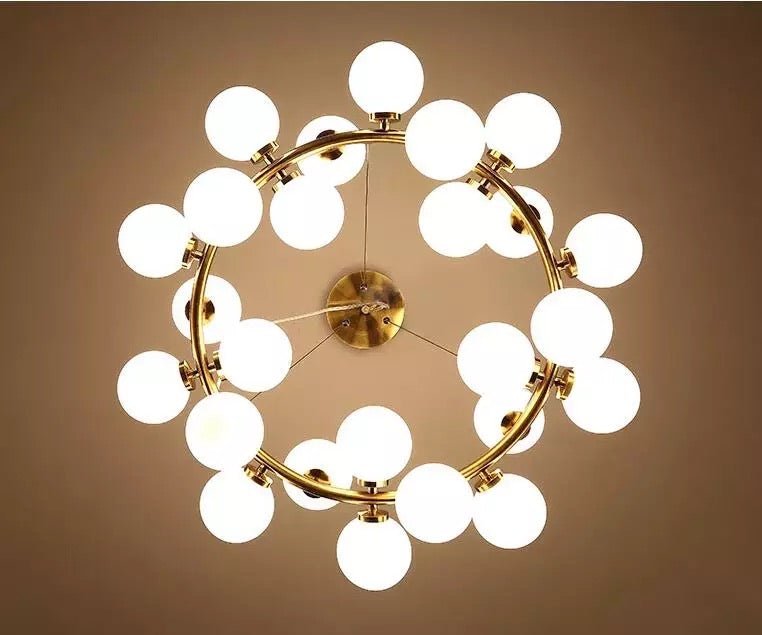
Buy this Elegant Chandelier From Shaghaf Home
Width is only half the story. The chandelier's height should match the ceiling so it looks proportional rather than stretched or squashed. A tall chandelier under a low ceiling feels like it is pressing down on the room, while a short one beneath a high ceiling looks like it is floating without purpose.
A reliable guide is to allow about 2.5 to 3 inches of fixture height for each foot of ceiling height. In metric terms, that is roughly 20 to 25 centimeters of fixture for every meter of ceiling. This keeps the fixture in scale with the vertical space around it.
| Ceiling Height | Suggested Fixture Height |
|---|---|
| 2.4 m (8 ft) | 50 cm (20 in) |
| 2.7 m (9 ft) | 55 to 65 cm (22 to 26 in) |
| 3.0 m (10 ft) | 60 to 75 cm (24 to 30 in) |
| 3.6 m (12 ft) | 75 to 90 cm (30 to 36 in) |
| 4.5 m (15 ft) | 90 to 110 cm (36 to 44 in) |
For rooms with very high or double-height ceilings, long chandeliers, tiered designs, and cascading pieces fill the vertical space and keep the room from feeling empty above eye level. In these rooms, a fixture that is too modest in height can look lost against the volume of the space.
How High to Hang a Chandelier
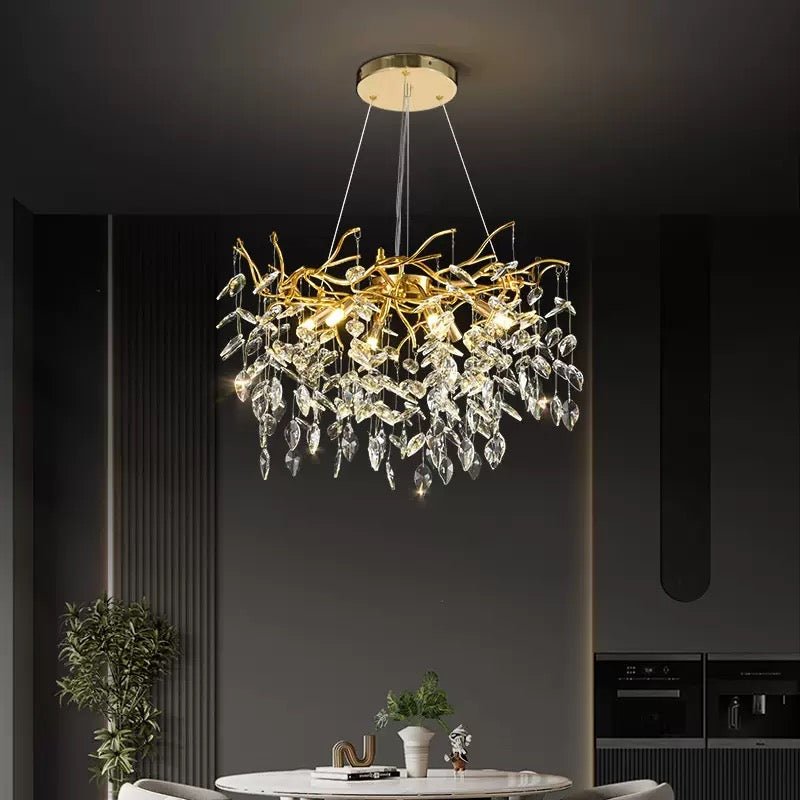
Lumière Royale Gold Crystal Chandelier - Order Now
Hanging height matters just as much as size. In open areas where people walk, the lowest point of the chandelier should sit at least 210 centimeters (7 feet) above the floor, so no one has to duck beneath it. This clearance also keeps the fixture safe from accidental bumps in busy parts of the home.
Above a table, the rules are different. The fixture hangs lower because the table surface is the reference point rather than the floor. The goal is to bring the light close enough to feel intimate without blocking the view across the table.
- Standard ceilings of about 2.4 to 2.7 meters: hang the chandelier 75 to 80 centimeters (30 to 32 inches) above the tabletop
- Ceilings around 3 meters: hang it at 80 to 90 centimeters (32 to 36 inches)
- Very high ceilings: raise the chandelier by about 8 centimeters (3 inches) for each extra 30 centimeters (1 foot) of ceiling height
Most chandeliers come with adjustable chains or cables, so the drop can be fine-tuned during installation. It helps to test the height with a helper before the final fitting, since small adjustments can change how the fixture feels in the room.
Choosing a Chandelier for the Dining Room
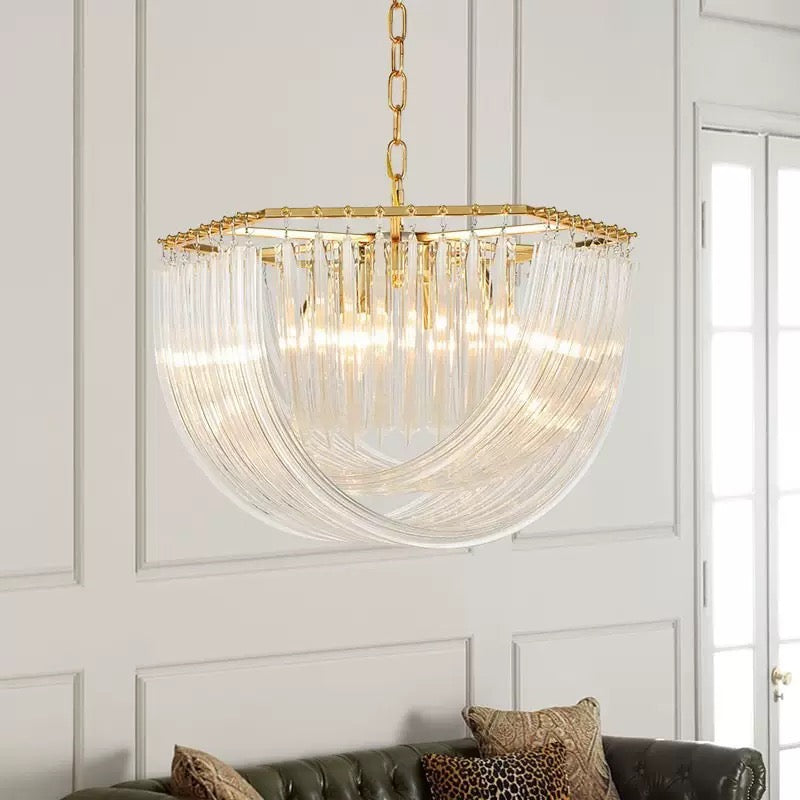
Aurora Crystal Drape Chandelier – Gold Finish
The dining table is the most common place for a chandelier, and it is also where proportions are easiest to judge. The fixture should relate to the table, not just the room, because it should light the table and frame the people sitting around it.
For a round or oval table, a chandelier that is one half to two thirds of the table's diameter looks balanced. For a rectangular table, a fixture around half the table's width and two-thirds of its length works well, or a row of pendants can follow the length of the table and spread light evenly along it.
| Table | Suggested Chandelier Width |
|---|---|
| Round, 100 cm (40 in) | 50 to 65 cm (20 to 26 in) |
| Round, 120 cm (48 in) | 60 to 80 cm (24 to 32 in) |
| Round, 150 cm (60 in) | 75 to 100 cm (30 to 40 in) |
| Rectangular, 160 x 90 cm | Around 80 to 100 cm long (32 to 40 in) |
| Rectangular, 200 x 100 cm | Around 100 to 130 cm long (40 to 52 in) |
| Rectangular, 240 x 100 cm | Linear fixture or pendants spanning 120 to 160 cm (48 to 64 in) |
A chandelier should also stay at least 30 centimeters (12 inches) inside each edge of the table. This leaves room for chairs and guests to move, and it keeps the light from feeling like it is pressing on the diners below. Long rectangular tables often look best with a linear chandelier or a set of two or three matching pendants, since a single round fixture can leave the ends of the table in shadow.
Choosing a Chandelier for the Living Room
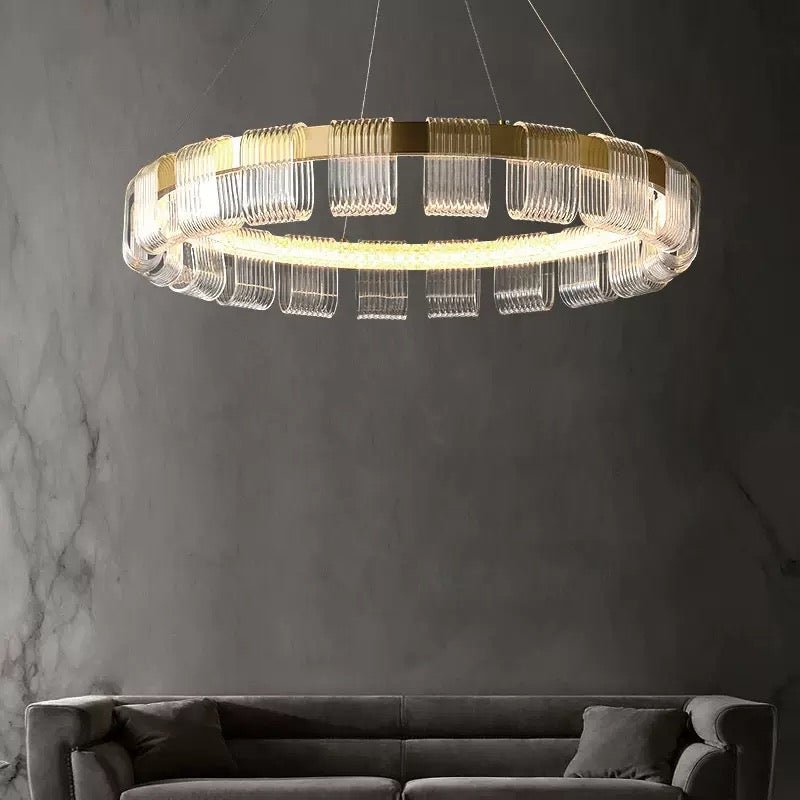
Shop this Lumière Halo Acrylic Ring Chandelier
Living rooms rarely have a single obvious focal point, so the chandelier is usually centered over the seating group or the coffee table. Its width should reflect the size of that group rather than just the room, with roughly half to two-thirds of the width of the seating area serving as a good guide. This keeps the fixture connected to the furniture beneath it.
Rooms with a lower ceiling usually suit flush or semi-flush chandeliers, which sit close to the ceiling and avoid blocking sightlines. Taller rooms can take a longer drop, and a larger fixture helps balance big sofas and heavy furniture below.
in open-plan layouts, the chandelier can help define the seating area, marking it out visually without needing a wall or divider.
- Center the fixture over the coffee table or main seating group
- Keep at least 210 cm (7 ft) clear underneath wherever people walk
- Match the fixture's visual weight to the furniture around it
- Add lamps and wall lights, so the chandelier is not the only source of light
Choosing a Chandelier for the Bedroom
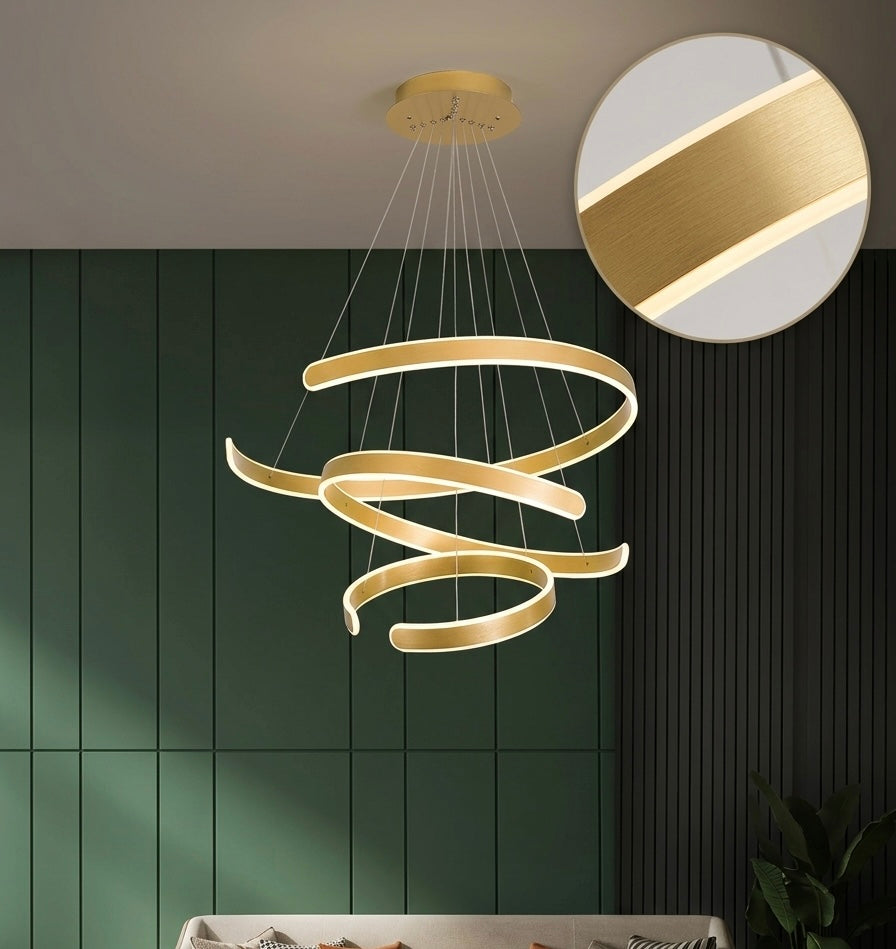
Lume Spiral LED Chandelier – 3-Ring Brushed Gold | Dimmable | Remote Control
A bedroom chandelier sets a softer, more romantic tone, and sizing can be a little more relaxed. Centered above the foot of the bed or in the middle of the room, a fixture that follows the room formula usually looks balanced. It becomes a gentle focal point that adds character without demanding attention.
Smaller bedrooms are well served by compact chandeliers around 45 to 60 centimeters (18 to 24 inches) wide, while larger master suites can take fixtures of 75 centimeters (30 inches) or more.
Dimmable bulbs help the light feel gentle in the evening, and a warm tone keeps the room calm. Placing the chandelier directly above the bed is best avoided in low-ceiling rooms, since it can feel too close to the sleeping area.
Choosing a Chandelier for the Entryway and Staircase
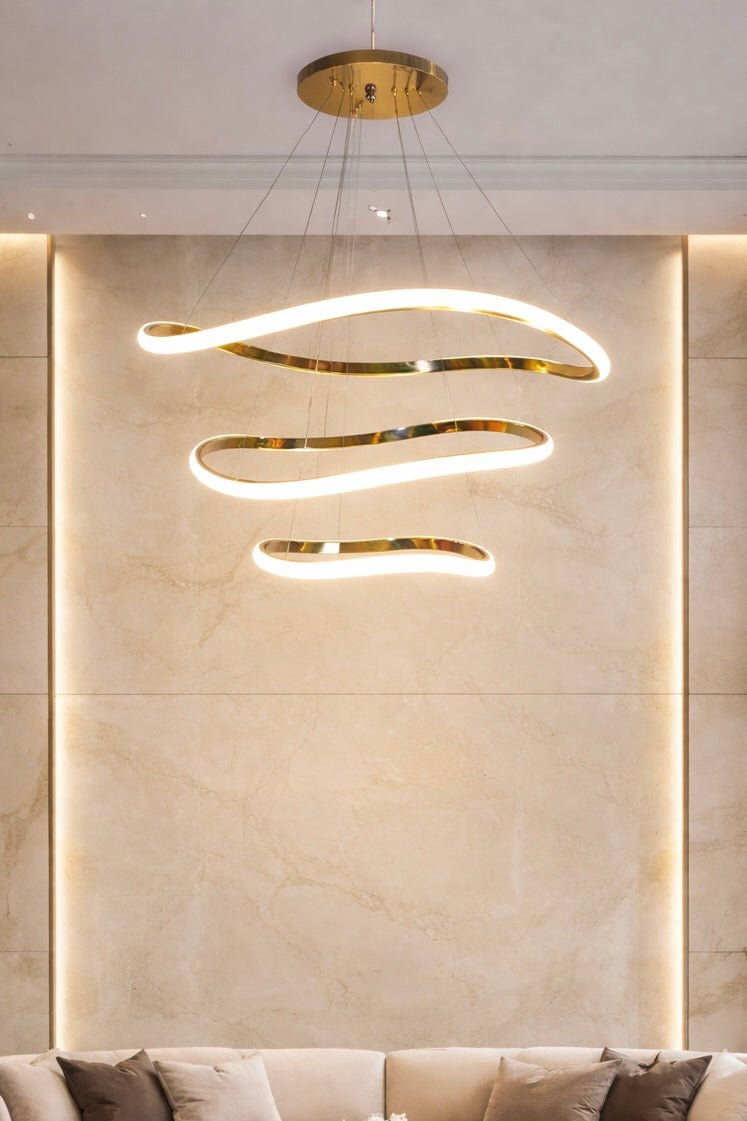
Elysium Gold Chrome LED Chandelier – Modern Ring Statement Light
Entrances call for a chandelier that makes a strong first impression, and in two-story foyers the scale can be generous. A good guide is to choose a fixture with a width between one quarter and one third of the foyer's width, then adjust for the room's height. A bolder piece suits a grand entrance, while a modest one keeps a narrow hallway from feeling crowded.
The bottom of the chandelier should sit well above head height, and in a double-height space, it should hang so that it is visible from both the ground floor and the landing. Long, tiered, or cascading chandeliers suit these tall spaces, since their height matches the volume of the room.
Over a staircase, the lowest part of the fixture should be at least 210 centimeters (7 feet) above the highest step it hangs over, so no one can brush against it.
Choosing Lights for the Kitchen Island
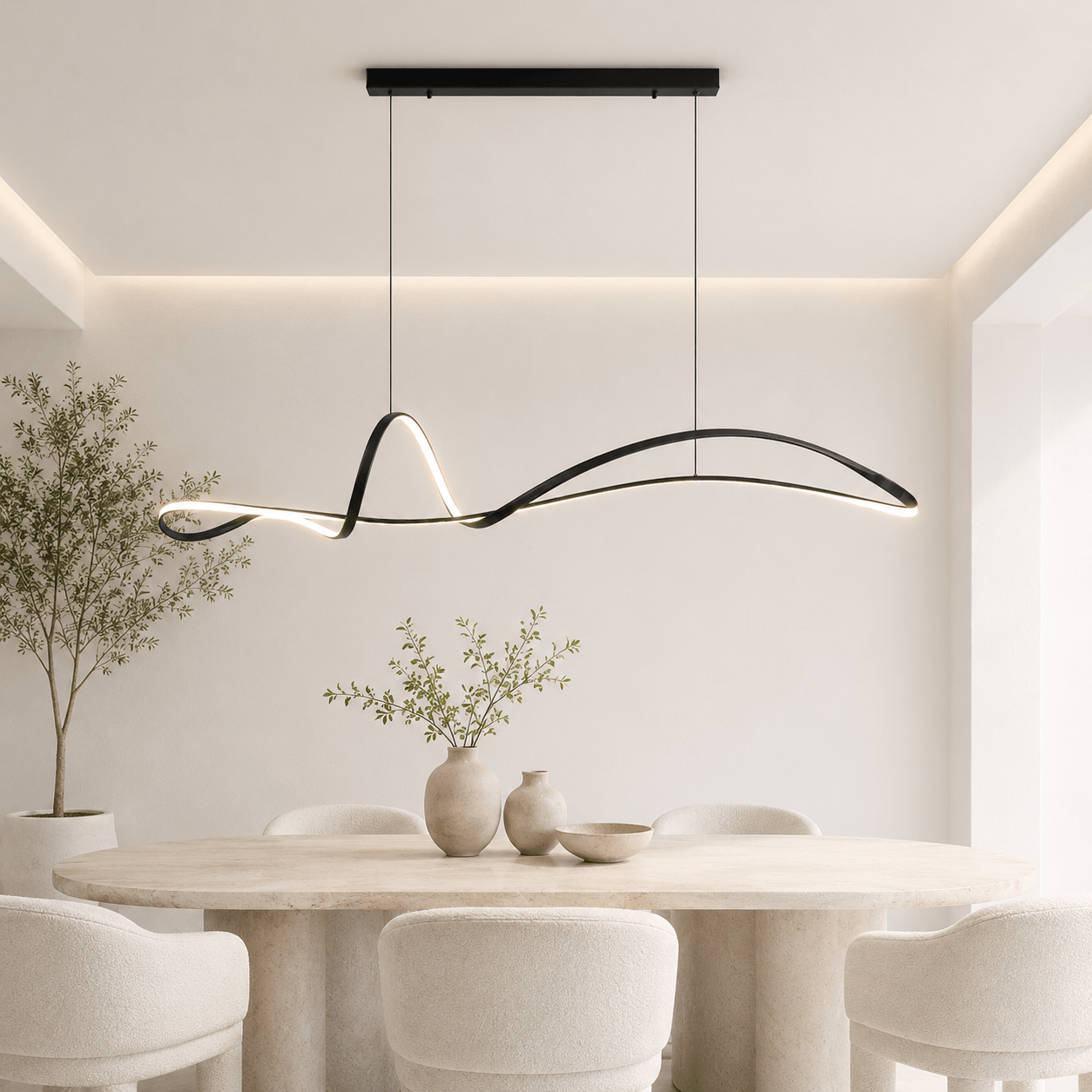
Modern Wave LED Pendant Light - Su--
Kitchens often call for several smaller pendants rather than one large chandelier. Over an island, hang the lights about 75 centimeters (30 inches) above the counter surface, and space them evenly so the whole worktop is covered.
This arrangement gives focused light for food preparation while adding a decorative line above the island.
- Two pendants: place them roughly a quarter and three quarters along the island's length
- Three pendants: space them about 60 to 75 centimeters (24 to 30 inches) apart
- Four or more: use smaller fixtures, so the line of lights does not feel crowded
- Width: keep the full row at least 30 centimeters (12 inches) shorter than the island
Shape and Visual Weight Matter as Much as Size
Two chandeliers with the same measurements can look very different in a room. A dense fixture made of thick metal, dark glass, or many layers carries more visual weight and will feel larger than an open, airy design of the same size. Thinking about visual weight alongside measurements helps avoid a fixture that overwhelms the room.
- Round chandeliers suit square rooms and round tables
- Linear chandeliers follow rectangular tables and long rooms
- Tiered or cascading designs fill tall, double-height spaces
- Open frame and wire designs suit smaller rooms, where a solid fixture might feel too heavy
- Cluster pendants offer flexibility, since groups can be arranged to fit unusual spaces
When in doubt, a slightly lighter and airier fixture is easier to place than one that is heavy and dense, and it leaves more room for other decor to shine.
Brightness, Bulbs, and Placement of Light
A chandelier should work as a light source and as a decorative piece, so its brightness matters alongside its size. Larger rooms need more lumens, and chandeliers with many small bulbs spread light more gently than those with only some strong ones. This keeps the glow even and avoids harsh spots on the table or floor.
Warm white bulbs create a soft, welcoming glow suited to dining rooms and bedrooms, while neutral white can work well in kitchens where tasks need clearer light.
Dimmers add flexibility, allowing the same fixture to be bright for dinner preparation and low for a quiet evening. Chandeliers rarely provide all the light a room needs, so wall lights, floor lamps, and table lamps are worth planning as well.
Weight and Installation Considerations
Large chandeliers can be heavy, and the ceiling must be able to support them. Fixtures that weigh several kilograms often need a reinforced mounting point, particularly in plasterboard or false ceilings. Skipping this step can lead to sagging or damage over time.
Before ordering, check the weight listed for the chandelier, the drop length, and whether the chain or cable can be shortened. Adjustable suspension makes it much easier to find the right hanging height on installation day, and professional fitting is recommended for large or heavy pieces.
Common Mistakes When Sizing a Chandelier
Even experienced homeowners fall into the same traps, and most of them are simple to avoid with a quick measurement.
- Choosing a fixture that is too small for the room or the table, which leaves it looking lost
- Hanging it too low over a table, which blocks the view across the room
- Ignoring the ceiling height, so a tall fixture touches the ceiling and a short one floats
- Forgetting about furniture, and placing the chandelier off center from the table or seating
- Overlooking the weight of the fixture and the strength of the ceiling
- Relying on the chandelier alone, without other layers of light
Quick Sizing Checklist
Before buying, it helps to run through a short list of measurements.
- Measure the room's length and width, and use the formula to find a diameter
- Measure the ceiling height, and check the fixture height against the table above
- For a dining table, measure its width and length, and stay at least 30 cm inside each edge
- Confirm the hanging height, with at least 210 cm clear in walking areas and 75 to 90 cm above a table
- Check the fixture's weight, drop, and chain length before ordering
Finding the Right Chandelier for Your Space
The right chandelier size comes from three simple measurements: the room, the ceiling, and the furniture below. Once those are clear, style becomes the enjoyable part, with crystal sparkle, woven texture, sculpted metal, and glowing rings of light all on the table.
Shaghaf Home offers chandeliers in a wide range of sizes, shapes, and finishes, from compact designs for apartment dining corners to long, cascading pieces for double-height villas across the UAE. Cutting a piece of paper or cardboard to the size of the fixture and holding it up in the room is a quick way to check the scale before buying, and it makes the final choice far easier.
Chandeliers come in a wide range of sizes, shapes, and finishes, from compact designs for apartment dining corners to long, cascading pieces for double-height villas. Cutting a piece of paper or cardboard to the size of the fixture and holding it up in the room is a quick way to check the scale before buying, and it makes the final choice far easier.



اترك تعليقًا
This site is protected by hCaptcha and the hCaptcha Privacy Policy and Terms of Service apply.