
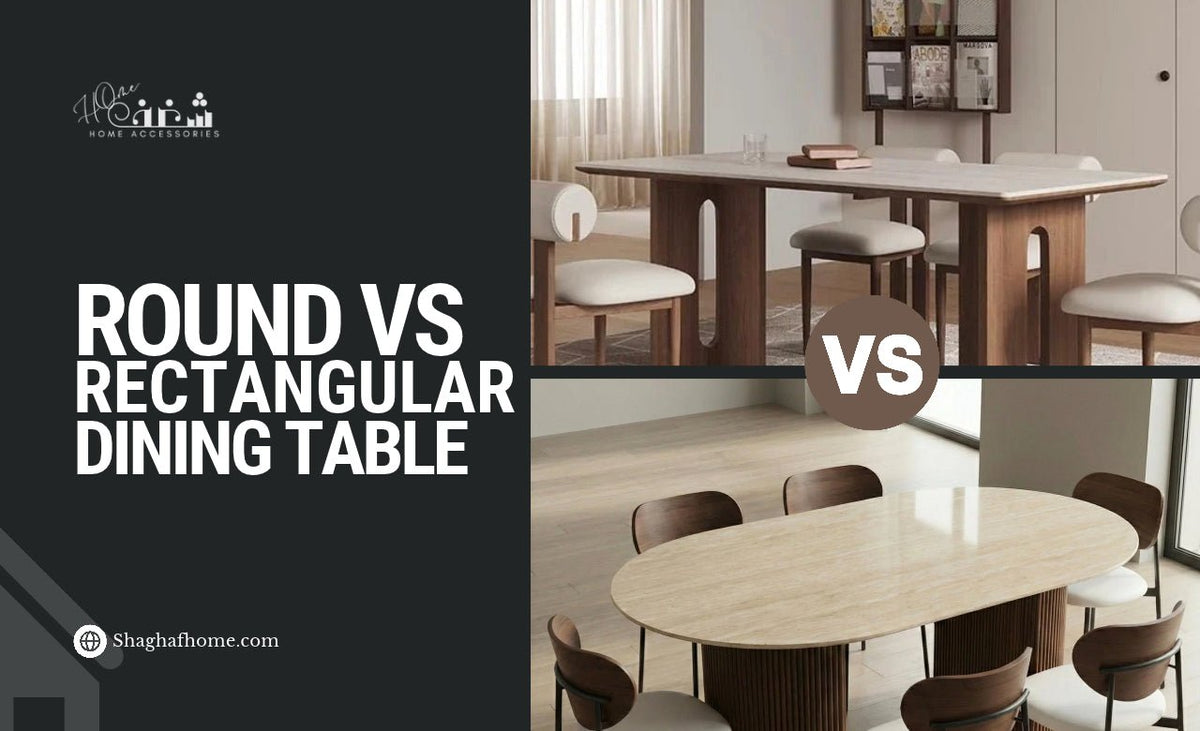
The shape of a dining table shapes everything around it, from how guests sit and talk to how much space is left for walking around the room. Round and rectangular tables are the two most popular options in UAE homes, and each one suits a different room, a different household, and a different way of entertaining.
Both shapes can look beautiful, and neither is a mistake. The right answer depends on the size of the dining area, the number of people who sit down together, and the atmosphere you want at the table.
Below, we have explained what makes each shape different, where each one works best, and how to match a table to the room it will live in.
What Makes a Rectangular Dining Table Different
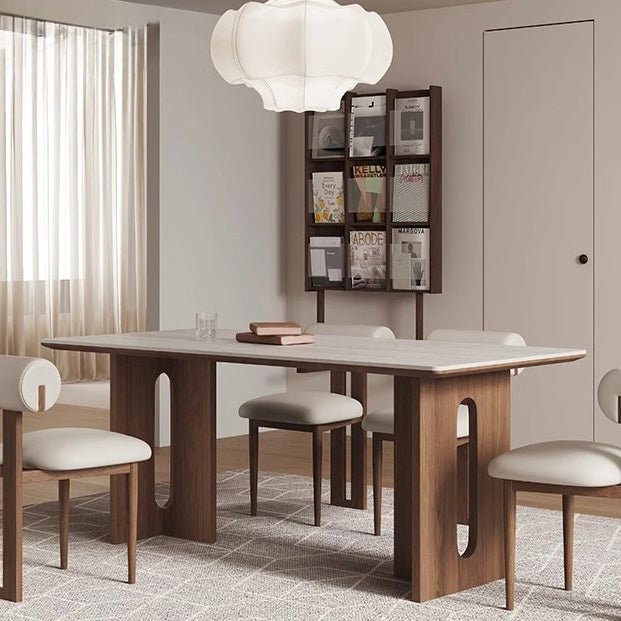
Buy this Modern Ceramic Dining Table with Natural Wood Base
A rectangular table is the traditional shape for a reason. Its length offers generous surface space, with room for platters, serving dishes, centerpieces, and place settings all at once. It seats more people as it grows, because additional chairs simply line up along the sides and ends.
The long, straight lines suit formal dining rooms, open-plan layouts, and homes where hosting is a regular part of life. A rectangular table also defines a clear head and foot, which gives a dinner a structured, ceremonial feel that many families enjoy during gatherings and celebrations.
Corners are the trade-off. They take up more floor space, can be uncomfortable in a tight room, and make it harder to squeeze in extra guests without cramping the seating. In a small space, a rectangular table can feel dominant unless it is carefully sized.
Explore Shaghaf Home Dining Tables Luxury Collection (UAE)
What Makes a Round Dining Table Different

VALENTINA white dining table set (With 6 Chairs)
A round table has no head, no foot, and no corners, which changes the feel of a meal immediately. Everyone sits at an equal distance from the center, so conversation flows across the whole table instead of splitting into small groups at either end. It is a shape that encourages sharing, and it suits families and friends who like to pass dishes around.
Round tables also take up less visual space than their rectangular counterparts. With no corners to navigate, people move around them easily, and the soft curve breaks up the straight lines of walls, cabinets, and windows. A single pedestal base leaves more legroom, which makes it simple to add an extra chair when someone unexpected joins the meal.
There are limits to consider. As a round table grows larger, the center becomes hard to reach, and a very big circle can make serving and passing dishes awkward. For that reason, round tables tend to work best for smaller to mid-sized groups.
The Best Rooms and Situations for a Rectangular Dining Table
Rectangular tables earn their place wherever space, capacity, and hosting matter most.
1. Large Formal Dining Rooms
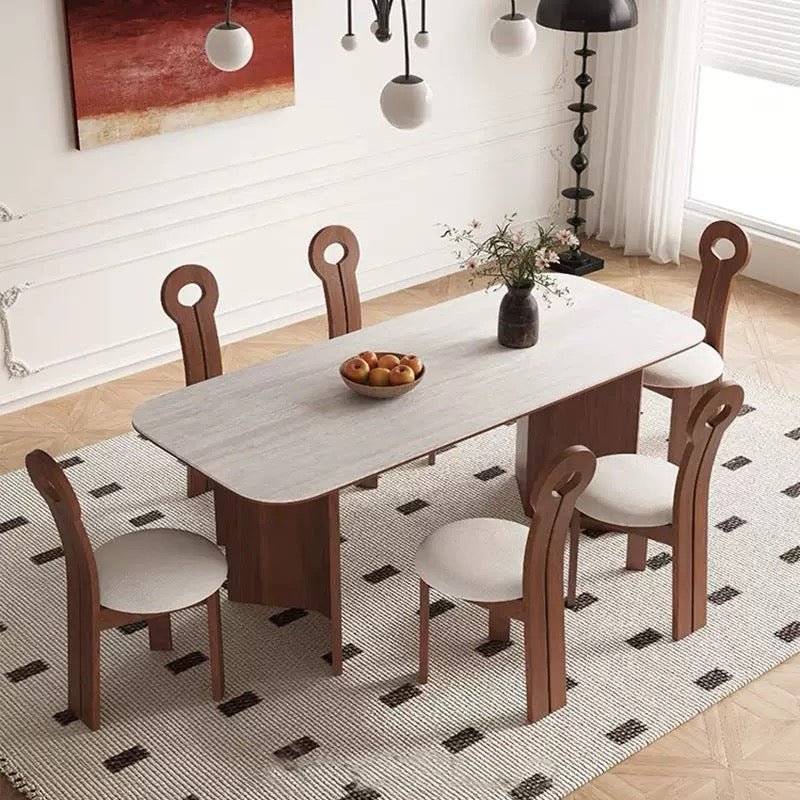
Arden Sintered Stone Dining Table – Solid Wood Base
In a spacious dining room, a rectangular table makes full use of the floor area and gives the room a stately presence. Its length suits a sideboard along the wall, a statement lighting fixture above, and a generous rug beneath, creating a complete and layered dining space.
A larger room can also handle the visual weight of a substantial table, so thick stone tops, solid wood slabs, and sculptural bases all look in proportion rather than overwhelming.
2. Long or Narrow Dining Areas
Some homes have dining spaces that are longer than they are wide, common in open-plan apartments and in rooms that run alongside a living area. A rectangular table follows the line of the room, keeping circulation space open at the sides while using the full length effectively.
A round table in this type of room often leaves wasted space at both ends. A rectangular shape fits the room's natural proportions and leaves a cleaner walkway beside the table.
3. Frequent Entertaining and Large Gatherings
Hospitality is central to life in the UAE, and many households host family and friends regularly. A rectangular table can seat eight, ten, or more guests with ease, and it offers plenty of surface for serving dishes, trays, and decorative centerpieces.
- Seats more guests as the table lengthens
- Provides ample space for buffet-style serving
- Allows extra chairs to be added at the ends when needed
- Creates a formal, ceremonial feeling for celebrations
4. Dining Areas Placed Against a Wall or Bench
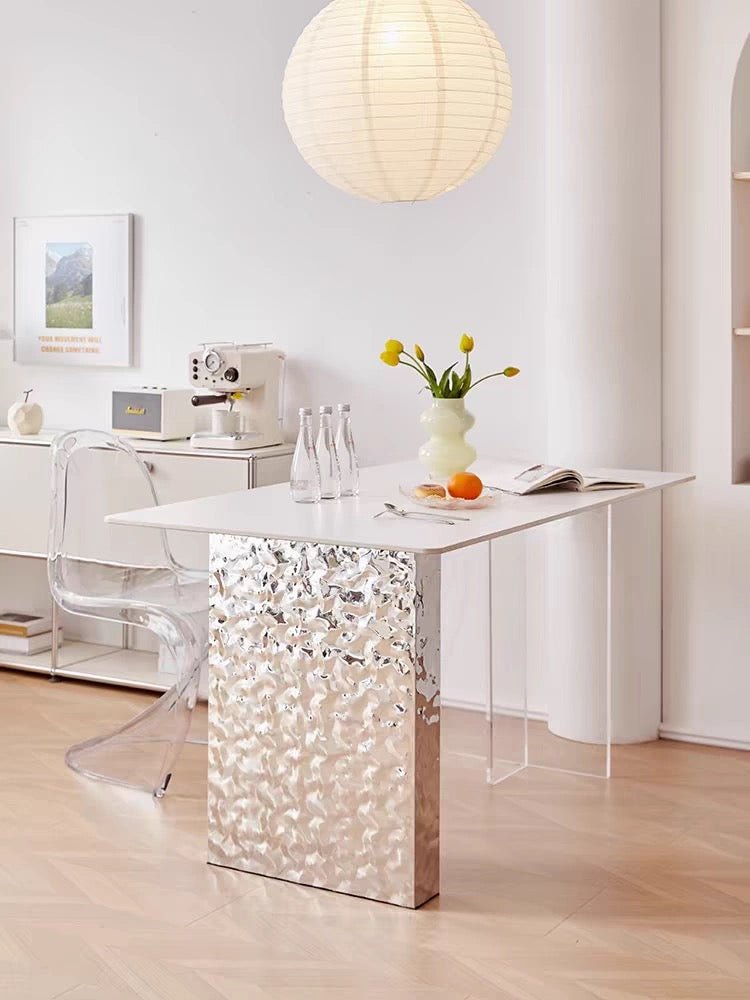
Modern rectangular white and silver dining table
When one side of the table sits against a wall or built-in bench, a rectangular shape is the natural fit. It tucks neatly into the layout, saves floor space, and allows a bench seat on one side with chairs on the other, a setup that comfortably seats more people in a smaller footprint.
The Best Rooms and Situations for a Round Dining Table
A round table is not just a stylistic choice. It solves particular layout problems, and in certain rooms it is the most practical option available.
1. Compact Apartment Dining Areas
Many apartments in Dubai have a dining space that is part of a combined living area, with little room to spare. A round table fits neatly into these corners because it has no sharp edges to bump into and leaves clear paths on every side. It lets a small household dine comfortably without crowding the surrounding furniture.
Pedestal bases make the most of limited space, since there are no legs at the corners to limit where chairs can sit. In a tight layout, this simple detail makes a noticeable difference to everyday comfort.
2. Square or Nearly Square Rooms
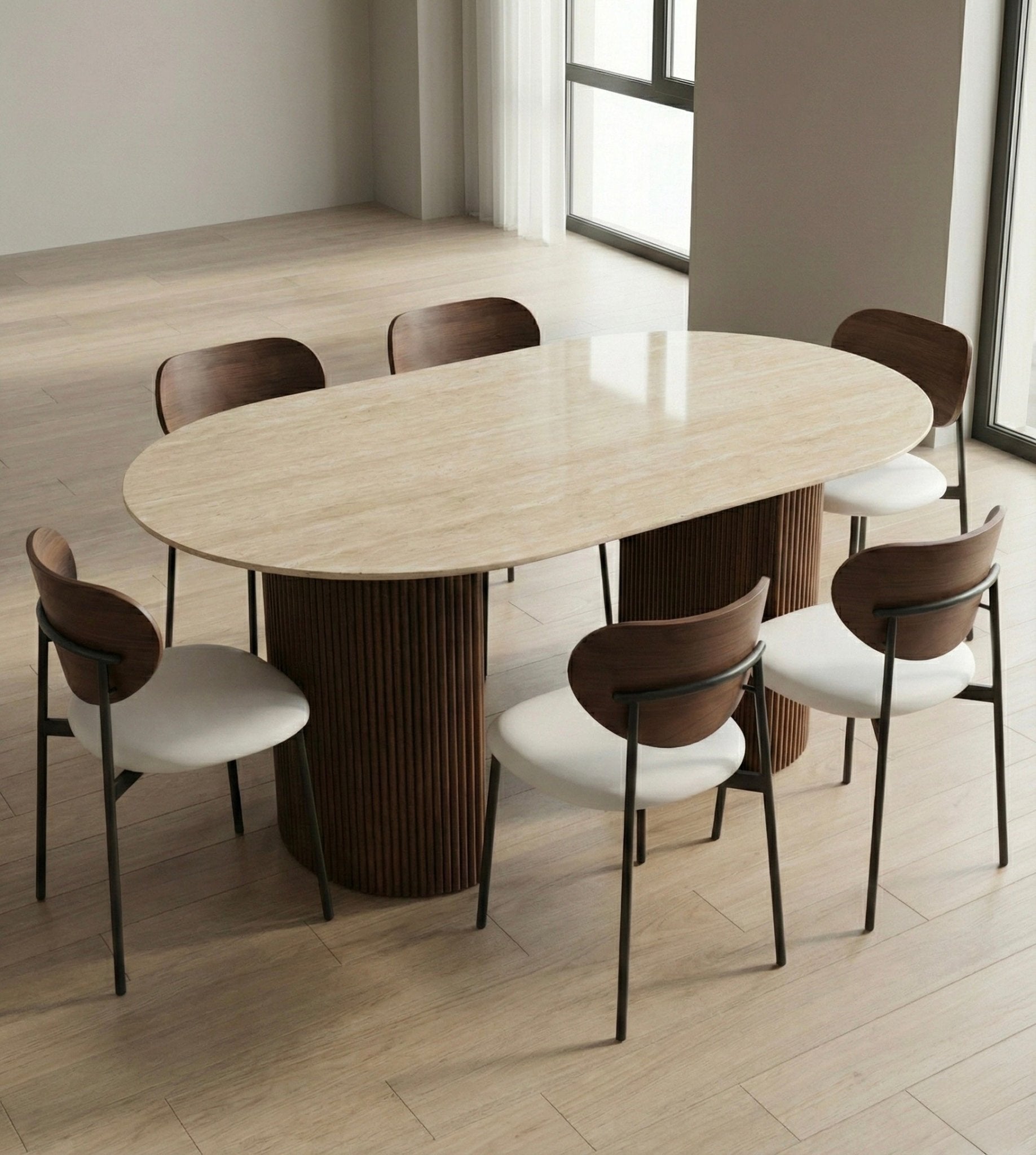
Opéra Natural Stone Dining Table - Shop Online Today
A round table suits a square room naturally. It mirrors the proportions of the space, so the layout feels balanced rather than forced, and the curve softens the room's hard corners. A rectangular table in the same space often leaves awkward gaps at the ends, while a round one fills the center comfortably.
Placed beneath a single pendant or chandelier, a round table also creates a clear focal point. The light, the table, and the rug below can all be centered together, producing a tidy and cohesive look.
3. Breakfast Nooks and Kitchen Dining Corners
For everyday meals in or beside the kitchen, a small round table brings warmth and ease. It works well in a bay window, a corner, or beside a counter, and it gives families a casual place to eat, work, or share a coffee without the formality of a long table.
- Fits tight corners without blocking walkways
- Feels relaxed and welcoming for daily use
- Easy to move around when cleaning or rearranging
4. Intimate Gatherings and Conversation-Focused Meals
When the goal is lively conversation, a round table is hard to beat. Everyone can see and hear each other without leaning across a long surface, which makes it ideal for small family dinners, close friends, and relaxed evenings where talking matters as much as the food.
Tables in the range of 100 to 150 centimeters wide usually serve this purpose best, seating between four and six people with a shared center that stays within reach.
Round vs Rectangular Dining Table at a Glance
| Feature | Round Table | Rectangular Table |
|---|---|---|
| Best for | Small to mid-sized groups | Medium to large groups |
| Conversation | Everyone faces each other | Flows best between neighbors and across |
| Space needed | Compact, good for tight rooms | Needs more floor length |
| Room shape | Square or nearly square | Long, narrow, or large rooms |
| Seating flexibility | Easy to squeeze in one more | Easy to add chairs at the ends |
| Surface area | Smaller usable surface | Larger surface for serving |
| Formal feel | Relaxed and welcoming | Traditional and structured |
| Corners | None, safe for children | Present, take more room |
How Many People Does Each Shape Seat
Size matters as much as shape, and a quick guide helps avoid choosing a table that is too small or too large for the household.
Round tables
- 90 to 100 cm: seats two to four
- 120 cm: seats four to five
- 150 cm: seats six
- 180 cm: seats eight, though the center becomes harder to reach
Rectangular tables
- 140 to 160 cm: seats four to six
- 180 cm: seats six to eight
- 220 to 240 cm: seats eight to ten
A comfortable allowance is about 60 centimeters of table edge for each person, which leaves enough elbow room without crowding.
Space and Clearance: Planning the Room
Before settling on a shape, it helps to measure the dining area and allow for movement around the table. Chairs need space to be pulled out and used, and people need room to walk behind seated guests.
A distance of around 90 centimeters between the table edge and the nearest wall or furniture is a good target. This allows chairs to slide back comfortably and gives guests room to move without squeezing past one another.
Rooms with limited space often benefit from a round table, since its curved edge reduces the footprint that corners would otherwise occupy. Larger rooms can take either shape, and the decision then turns on seating needs and style.
Lighting, Rugs, and Styling Considerations
The table shape also guides what hangs above it and what sits beneath it.
A round table pairs naturally with a single pendant or chandelier positioned directly over the center. The circular form of the light echoes the circle of the table, and the whole arrangement looks calm and intentional.
A rectangular table gives more options. A row of two or three pendants, a linear fixture, or a single long chandelier follows the length of the table and spreads light evenly across it.
Rugs should be large enough that chairs stay on the rug even when pulled back. Round tables suit round or square rugs, while rectangular tables look best with rectangular rugs that extend at least 60 to 90 centimeters beyond the table edges.
Materials, Maintenance, and Budget
Dining tables come in many materials, and the right shape works hand in hand with the right finish.
- Natural stone and marble add luxury and are naturally cool and durable, though they need sealing to resist stains
- Solid wood brings warmth and can be refinished over time
- Glass tops keep a room looking open and light, but show fingerprints more easily
- Sintered stone and ceramic resist heat, scratches, and stains, which suits busy households
- Metal or lacquered finishes offer a modern look with simple upkeep
Round tables often use less material than a long rectangular table of similar seating capacity, though pedestal bases and curved tops can involve complex craftsmanship. Prices depend more on material and finish than on shape, so it helps to compare options within the same quality tier.
Matching Chairs to the Table Shape
The best chairs are comfortable, proportioned to the table, and shaped to suit the table's lines.
Round tables look elegant with curved or rounded chairs, such as barrel backs or softly sculpted seats, since they echo the circular form. Rectangular tables pair well with chairs that have straighter lines, although softly curved designs can add contrast and warmth.
Chair width also matters. Narrow chairs let more guests sit around a table, while wider, more cushioned styles need extra space and suit larger tables.
Explore Dining Tables for Every Room at Shaghaf Home
Most people already know which table they want the moment they picture a Friday dinner in their own home. A long table filled with family, or a round one with four close friends leaning in over coffee: that picture usually answers the question before the measuring tape comes out.
A round table suits smaller rooms, square layouts, and households that value conversation and a relaxed atmosphere. A rectangular table suits larger rooms, long dining areas, and families who host often and need generous seating and surface space.
Marking the table outline on the floor with tape is a simple way to test the fit before buying, and it shows right away how much space is left for chairs and walking around.
Shaghaf Home offers dining tables in different shapes, sizes, and finishes, from natural stone tops to sculpted wooden bases, so there is a table to suit every dining room across the UAE. Browse the collection, compare the sizes against your room, and pick the one that feels right for the people who gather around it.

Leave a comment
This site is protected by hCaptcha and the hCaptcha Privacy Policy and Terms of Service apply.